How to Read Gluten-Free Labels (Step-by-Step Safety Guide)
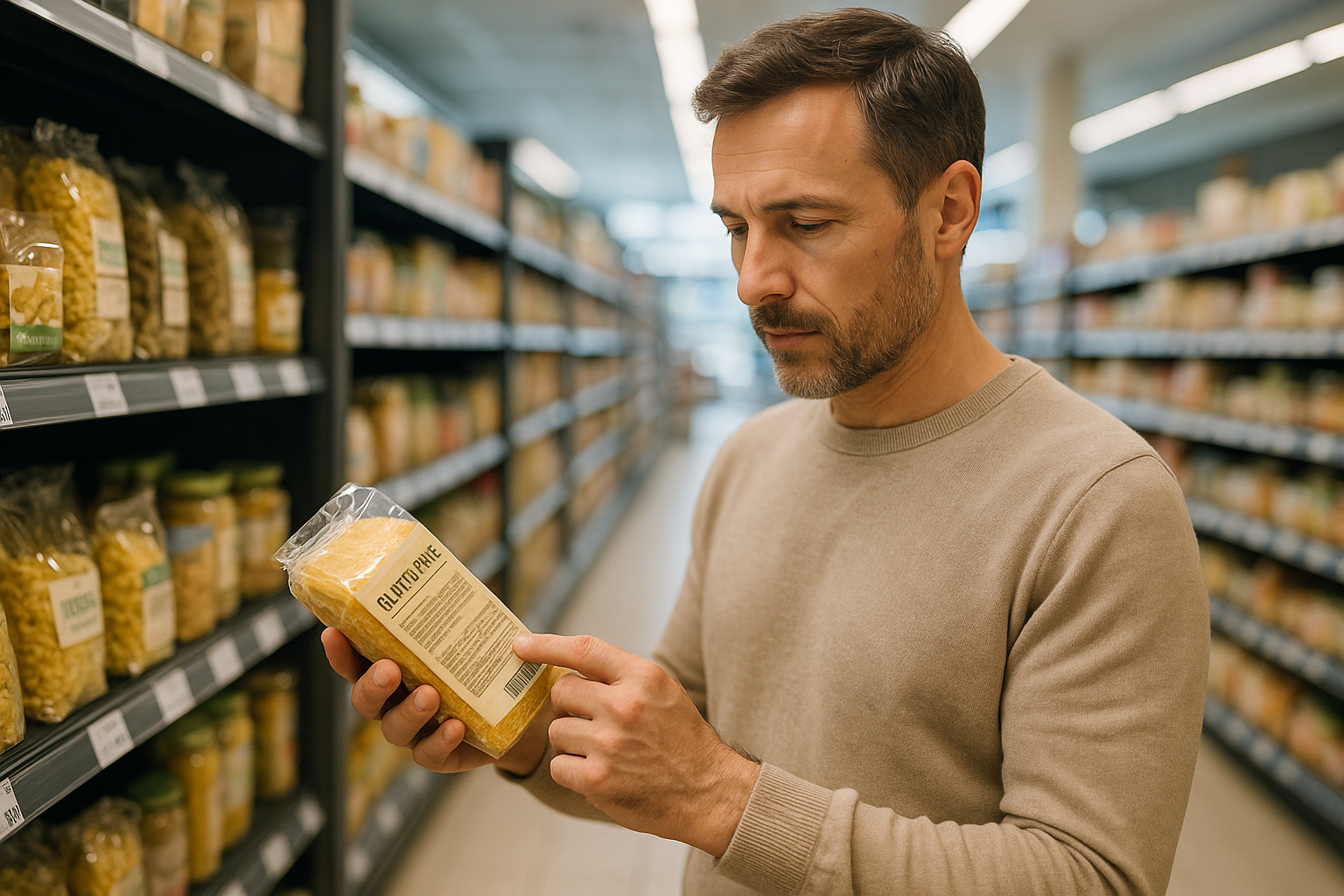
How to Read Gluten-Free Labels (Step-by-Step Safety Guide)
Table of Contents
- The Short Answer
- Why Label Reading Feels Harder Than It Should
- Step-by-Step Label Reading Workflow
- Regulatory Context You Actually Need
- High-Risk Scenarios at the Shelf
- Common Mistakes That Cause Gluten Exposure
- Printable Shopping Checklist
- Where BiteRight Fits In
- FAQ
- Related Reading
The Short Answer
To read gluten-free labels safely, use a fixed order:
- Look for a gluten-free claim or certification first.
- Scan ingredients for wheat, barley, rye, malt, and brewer’s yeast.
- Check for oats language (prefer controlled/certified gluten-free oats where relevant).
- Read advisory statements (like “may contain wheat”) conservatively.
- Re-check familiar products every time because formulas and factories change.
If any step is unclear, skip and choose a clearer alternative.
Why Label Reading Feels Harder Than It Should
People expect label reading to be binary: safe or unsafe. In reality, it’s a risk management exercise. The difficulty comes from three things:
- Not all wording is standardized. “Gluten-free,” “no gluten ingredients,” and “wheat-free” do not all signal the same safety confidence.
- Cross-contact risk isn’t always visible from ingredients alone. A clean ingredient list can still be risky depending on shared lines.
- Products evolve. Manufacturers reformulate, switch suppliers, or move production.
The best response is not memorizing every risky term. It’s building a fast, repeatable method that works across categories.
Download BiteRight on the App Store
Step-by-Step Label Reading Workflow
Use this in order, every time.
Step 1: Start with front-of-pack claim quality
Prefer, in descending confidence:
- Certified gluten-free (independent verification framework)
- Gluten-free claim from manufacturer
- No explicit claim (requires stricter ingredient + risk review)
Important: certification is not magic, but it generally adds process controls and audit structure.
Step 2: Read the full ingredient list
If sauces are your weak spot, use our practical guides for soy sauce, teriyaki sauce, and fish sauce.
Red-flag ingredients or terms:
- Wheat (including spelt, durum, semolina, farina, einkorn, emmer, kamut)
- Barley
- Rye
- Malt (often barley-derived unless specified otherwise)
- Brewer’s yeast (context dependent; treat conservatively)
Category-specific watchouts:
- Sauces, gravies, and marinades
- Seasoning blends
- Processed meats
- Snack flavor coatings
- Confectionery fillings
Step 3: Parse allergen and advisory statements
Two statement types are often mixed up:
- Declared allergens/contains statements (regulated in many markets)
- Precautionary statements like “may contain” (often voluntary)
For coeliac safety policy, treat “may contain wheat” as a risk flag, especially for routine staples.
Step 4: Handle oats carefully
Oats are a frequent confusion point. For a broader context, pair this with our gluten-free diet primer and hidden gluten guide.
- Oats themselves do not contain wheat/barley/rye gluten proteins.
- But oats can be contaminated in farming/transport/processing.
- Prefer labels that explicitly indicate controlled gluten-free oat practices or recognized gluten-free standards.
Step 5: Confirm manufacturer consistency over time
If a previously safe product now has:
- New flavor variant
- Updated ingredient order
- New factory or advisory text
…treat it as a new product and re-qualify from scratch.
Step 6: Use a decision rule
Adopt this household rule:
- Clear claim + clean ingredients + acceptable advisory context = shortlist
- Any ambiguity = do not buy this time
This reduces “decision fatigue” and accidental risk-taking.
Get BiteRight and scan labels in seconds
Regulatory Context You Actually Need
A deep legal briefing is unnecessary for shopping. What you need is a practical framework:
- “Gluten-free” claims generally rely on threshold-based rules in major markets.
- Ingredient disclosure is mandatory, but advisory wording practices differ.
- Terms like “wheat-free” are not equivalent to “gluten-free.”
Because audience members may shop across regions (or online import products), keep policy conservative and favor products with clear gluten-free positioning and stable labeling.
Useful authorities for verification:
- U.S. FDA gluten-free labeling guidance
- FSANZ standards and allergen labeling resources
- Coeliac disease organizations (patient-focused implementation guidance)
- Codex gluten-related standards context
High-Risk Scenarios at the Shelf
1) “No gluten ingredients” but no gluten-free claim
Could be fine; could also lack cross-contact controls. Don’t treat this as equivalent to gluten-free labeling.
2) Imported products with unfamiliar terminology
If the claim language doesn’t map cleanly to local standards, require stronger evidence before relying on it.
3) Flavored or seasonal variants
Base product may be safe while limited editions are not.
4) Bulk bins and unpackaged deli items
Even when ingredients seem safe, shared scoops/surfaces are a frequent risk point.
5) Oat-heavy snack bars and granolas
High variability in sourcing and handling controls.
6) Restaurant sauces sold at retail
Formulation language can differ from the in-restaurant version.
Common Mistakes That Cause Gluten Exposure
- Assuming brand trust replaces label checks.
- Checking only allergens, not ingredients.
- Treating “wheat-free” as sufficient.
- Ignoring advisory statements for “just this one time.”
- Forgetting to re-check recurring purchases.
- Confusing “organic” or “natural” with gluten safety controls.
A strong routine is boring by design. That’s what makes it reliable.
Printable Shopping Checklist
Use this as a quick yes/no flow:
- [ ] Product has certified gluten-free or clear gluten-free claim
- [ ] No wheat/barley/rye/malt/brewer’s yeast red flags in ingredients
- [ ] Oats, if present, are clearly handled under gluten-free controls
- [ ] Advisory statement does not create unacceptable risk for your household standard
- [ ] Label checked today, not assumed from memory
- [ ] First purchase trial plan: small quantity before bulk buy
If any box is unchecked, skip and choose another option.
Where BiteRight Fits In
BiteRight can support this workflow by turning your manual process into a repeatable scanner-assisted decision routine:
- Track products you’ve already validated
- Flag ingredient-language changes over time
- Keep a household-specific caution list
- Separate “safe for me” from “safe for occasional testing”
You still make the final decision, but decision quality improves when your process is consistent.
If you’re newly diagnosed and building your first safe shopping routine, start with our newly diagnosed guide and browse the full Knowledge Hub.
Download BiteRight — Start your 3-day free trial
FAQ
1) Is “wheat-free” enough for coeliac safety?
No. Gluten includes barley and rye as well. Wheat-free is not equivalent to gluten-free.
2) Are products with no gluten ingredients always safe?
Not always. Ingredient lists do not fully describe cross-contact controls.
3) Is certified gluten-free always better than gluten-free?
Not automatically, but certification usually adds independent oversight and process checks.
4) Should I avoid all “may contain wheat” products?
For a conservative coeliac household policy, many people do avoid these products, especially staples.
5) Can oats be included in a gluten-free diet?
Potentially, but only when sourcing/processing controls are clear and tolerated by the individual.
6) How often should I re-check labels?
Every purchase. Products and facilities can change.
7) Are imported foods riskier?
Not inherently, but labeling language and standards may differ, so clarity matters.
8) Are naturally gluten-free foods safer than packaged alternatives?
Whole single-ingredient foods can reduce labeling ambiguity, but handling still matters.
9) Is “made in a facility with wheat” always unsafe?
It is a risk signal. How strictly to interpret it should align with your household risk policy.
10) What should I do when label wording is unclear?
Skip the product and choose one with explicit, higher-confidence labeling.